Anime “Shinkalion Change the World” Toshihiro Suzuki interview!
The TV anime “Shinkalion Change the World” (hereinafter referred to as “Shinkalion CW”) will start broadcasting on TV Tokyo affiliates, BS TV Tokyo, and others from April 7, 2024.
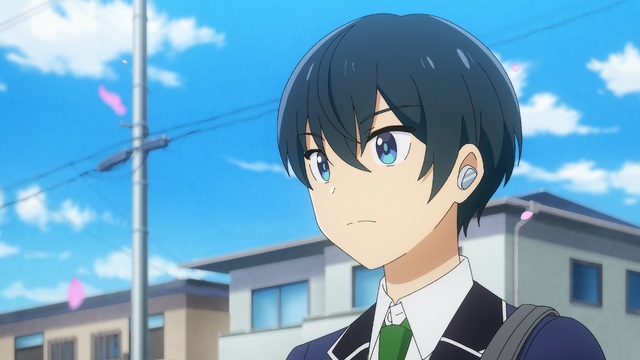
The TV anime follows “Shinkansen Henkei Robo Shinkalion” (January 6, 2018 – June 29, 2019) and “Shinkansen Henkei Robo Shinkalion Z” (April 9, 2021 – March 18, 2022) 3rd work. In this work, the animation production is Signal MD and Production I.G, the director is Kenichiro Komaya, the series composition is Eiji Umehara, and the lineup is completely different from the previous series works. A new story featuring Taisei Taisei, a second year middle school student, as the main character.
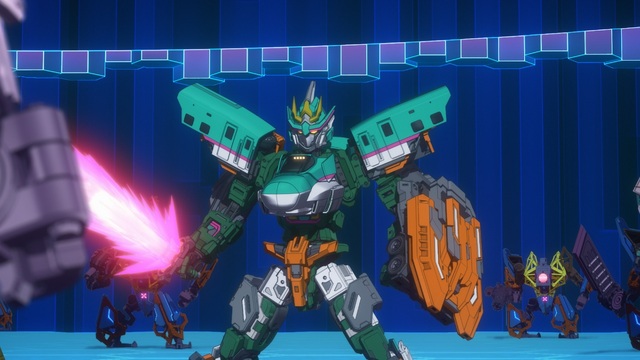
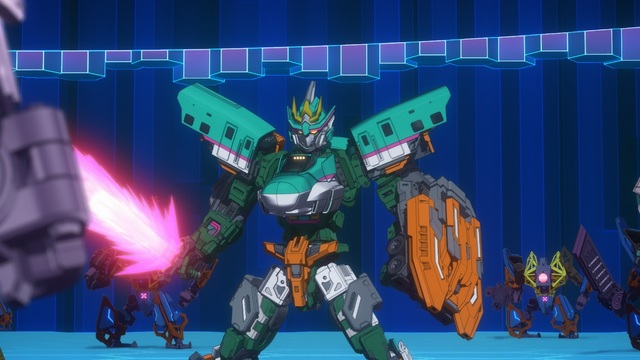
Furthermore, this time’s Shinkalion (robot) has a vehicle combination'' with an Elda vehicle such as a large trailer, and athree-vehicle combination” of Shinkalions, so it will be interesting to see what kind of Shinkalion will be used in the same way as in the story.
How was Shinkalion CW created? We spoke directly with Toshihiro Suzuki, who has been involved in the Shinkalion series as a producer since the first work in the series, and talked about various things such as the production system and the highlights of the work.

Toshihiro Suzuki Producer
Precisely because their worldviews are not connected, the main character is a junior high school student.
――From the previous series, the production of “Shinkalion CW” has changed to Signal MD and Production I.G, and the director has changed to Kenichiro Komaya. With the exception of Daisuke Ishibashi, who was also the scriptwriter for the previous work (co-series composition), the system is almost completely new. Please tell us how you decided to set up the team like this.
Suzuki: One of the big reasons is that this work has a different worldview than the previous Shinkalion series. I didn’t want to drag down the image as it was, or rather I wanted to aim for a Shinkalion that was different from the previous ones.
Another reason is to “broaden the target.” After the coronavirus pandemic, the viewing environment and viewing habits for anime have changed, and now children can watch it without having to make it for them. If that’s the case, I wanted it to be a work that would be interesting for children to watch, and would also be interesting for older generations to watch. To that end, is it okay to keep the same production members, including the script and visual aspects? So, I decided to take the plunge and set up a group like this. It’s not like I’m throwing away what I’ve accumulated so far, but I’m just cutting it off. I think that was a courageous approach.
–How did Signal MD and Production I.G come to be in charge of production?
Suzuki: There are many reasons, but I respect and admire I.G Group’s works. I wanted to aim for a work like the ones they had made, and I wanted to work with them, and Signal M.D. and Production I.G. agreed with me.
–How about trying it out?
Suzuki: I felt that they were a very reliable production company, with a really solid way of thinking about anime and how they proceeded with their work.
–Please also tell us your impressions of Director Komaya.
Suzuki: It was recommended to me by Signal M.D. and Production I.G., and when we started making the work, they were very enthusiastic. When asked for their opinions at the scenario meeting, they answered accurately, and I think they have built a good production team.
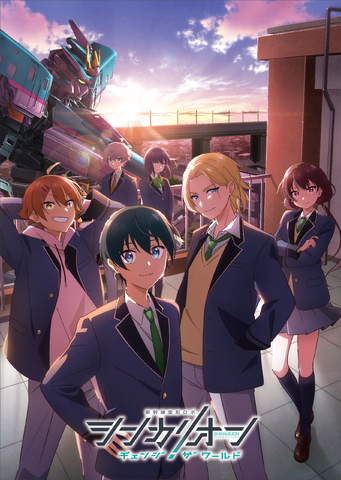
–This may be related to “widening the target audience,” but what surprised me was that the main character was a middle school student, not an elementary school student. The key visual also looks mature, so why did they choose a middle school student?
Suzuki: I think it would be difficult to make changes if we keep the same elementary school characters as before, and the way the story progresses will be completely different depending on whether the characters are elementary school students or middle school students. The biggest thing is that it was easier to create something that I imagined by having a middle school student as the main character.
Also, from the point of view of elementary school students, junior high school students become older brothers and sisters, so they can look up to them, and junior high school students are a very difficult age when they are trying to become adults. I felt there were a lot more possibilities in writing a coming-of-age story with middle school students.
–I was wondering if there was a meaning to suit the children who grew up watching Shinkalion.
Suzuki: That’s not true. “The world is not connected to the previous works = you can assemble it from scratch,” so I purposely chose the character to be a junior high school student. There was an idea to make him a high school student, but I thought that a high school student would have a different way of walking, and it would be difficult to play Shinkalion, so I decided to make him a middle school student.
――Until now, the “compatibility rate” for moving Shinkalion was low unless you were an elementary school student, so I thought it would be okay for middle school students, but I guess that’s because the world is not connected.
Suzuki: Yes. This means that not all the settings up until now will be adopted. “Precision rate” is also referred to as “aptitude value” in this work, and various names have changed slightly.
–You mentioned the target audience earlier, but if you were to describe the target audience for this work again, what would you say?
Suzuki: “All targets.” …To answer that is frankly cowardly (lol). You can also look at it as if it would be good if it caught on somewhere. People in the industry often say that “all targets” is cheating.
But really, what I originally wanted to do was an all-target'' anime. Since Shinkansen is the theme, I startedShinkalion” with the idea that I wanted to create a work and characters that would last forever, rather than just a one-off anime. I want it to be an anime that can be watched by all audiences, not just children or their families, including their parents. That’s why I purposely say “all targets” this time. I’ve done two TV anime works so far, and I think that’s what I’m aiming for next.
–I often hear people say that if you make a game for kids, the kids won’t be into it.
Suzuki: That’s right. Some children use smartphones, so the amount of information they have is different. That’s why, over the past few years, I’ve felt that we shouldn’t make fun of children, or rather that we don’t need to intentionally create movies for children.
–-Even if the settings are difficult, children will understand.
Suzuki: Nowadays, preschoolers watch “Demon Slayer: Kimetsu no Yaiba.” Even anime that is broadcast late at night can be watched on streaming, so I don’t think it’s necessary to make it suitable for children. Rather, the child will match it.
–-Fathers and mothers ask their children. What does this mean?
Suzuki: I think it would be great if it could lead to conversations like that between parents and children.
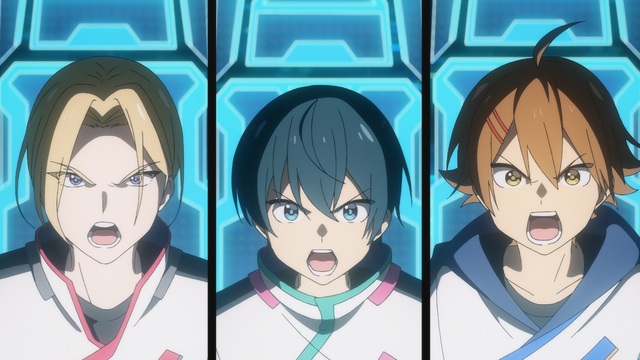
The highlight is a new combination! Please look forward to the arrival of new vehicles.
–Speaking of Shinkalion, I’m also looking forward to the robots and combinations. “Vehicle combination” and “three-vehicle combination” have already been announced, but please tell us how you came up with the idea.
Suzuki: The design of the Shinkalion and what it should be combined with are always difficult to decide on. Since the title is Shinkalion,'' of course theShinkalion” design will be used as a signboard, but it’s difficult. There’s also Plarail. Toys are amazing, and the technology is improving all the time, so the things you can do with them are expanding.
After thinking about a lot of things, I decided to create this work by combining it with these vehicles. However, there were many ideas until we arrived at this point, and we came up with ideas such as Wouldn't it be better to go back to the first stage and just use the plain Shinkansen (without combining them)?'' In order to release it, we thought,Some kind of combination is necessary.” By combining it with the vehicle, we were able to completely change the design and create a difference, so that’s how we proceeded.
–E7’s shiny drill equipment is hot even just by looking at it.
Suzuki: That’s right. It’s a big change in silhouette. To be honest, I didn’t expect that E7 Shiny would change so much by combining with Elda Drill and adding a drill.
――We can expect not only silhouettes but also visual effects, right?
Suzuki: Of course. The Shinkalion series is an action anime about robots, so that’s one of the highlights. I hope people look forward to seeing weapons that are different from what we’ve seen so far.
–By the way, Plarail has already been released, how has the response been?
Suzuki: Very nice. There were quite a few aspects of the design that were praised, and although it would be presumptuous to say it was exactly what I was aiming for, I think it was good.
–In addition to “vehicle merging” and “three-vehicle merging,” there may be other possibilities as the story progresses.
Suzuki: If that was all there was to it, the story would be over (lol). There are many more things to come, so please look forward to it.
――Please tell us what you would like us to expect from you, to the best of your ability.
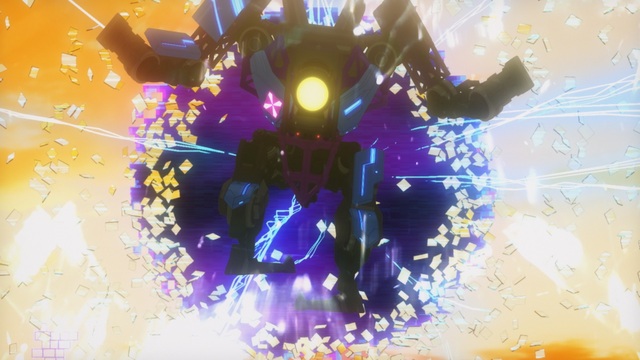
Suzuki: This was the case with the Black Shinkalion that appeared in the past, but I want people to look forward to seeing what kind of Shinkalion will appear as an enemy.
–Collaborations are always a hot topic in the Shinkalion series, but are there any plans to do so for this work as well?
Suzuki: Regarding the main anime, I am not actively thinking about collaboration this time. We may do some sort of collaboration for advertising purposes.
Our first collaboration for Evangelion was, after all, an original anime, so we wanted to create various hooks. Then I got so hooked on it that it became one of the colors for Shinkalion, so I thought it was a good idea and continued on. However, this time, I would like to allow viewers to watch the work for its own charm, without relying on the collaboration.

“Shinkalion” is a familiar hero, so we value “distance”.
–I think the story will be different because the main character is a middle school student. Please tell us what kind of story this time will bring.
Suzuki: There is no doubt that this will be a growth story, just like in the past. How the main character, Taisei, interacts with other characters and grows is depicted in great depth.
What I initially envisioned was, “I wish I could create something that would shock people when they saw my work.” I can’t say what the shock is yet, but it’s not a story about simple growth, so I hope you enjoy that aspect as well.
――In the comment of Mr. Ishibashi (sub-series composition) on the official website, it says, Be conscious of Shinkalion-likeness'', but what do you thinkShinkalion-likeness” is, Suzuki-san?
Suzuki: It’s quite difficult to put into words. I think it was the first game that formed the Shinkalion-ness''. However, I don't think that's the entirety of Shinkalion's uniqueness, and I think it's more fundamental than that. Since it's an anime about a Shinkansen that transforms, people often say,It’s an anime about Shinkansen robots,” but there are parts of me that don’t think of it as just that. How passionately should we create the story and characters? That kind of part is also necessary for Shinkalion. The production members for this work have changed significantly, but we now have people who understand our work from a deep level, so I think we were able to share that knowledge with everyone.
–It’s important to understand it by feeling it.
Suzuki: That’s right. Every time I start making Shinkalion, I don’t know if I’m going in the right direction until I open the lid. I think we turned out to be a good team this time as well.
――Then, regardless of Shinkalion, please tell us what you value when creating anime.
Suzuki: It probably depends on the work and whether or not there is an original work, but technically speaking, I would like to create highlights in each of the Avant, A part, and B part. When it comes to highlights, there are many things to consider, such as whether it’s content that makes you laugh or tears, or in the case of Shinkalion, whether it’s the parts that are shown like the transformation scenes. In any case, I want to create highlights in each part. I work backwards and think about things like, How do I create that highlight?'' andWhat should I include in this scene in this number of episodes?” I’m conscious of that when I do this.
Also, I am very conscious that the viewers, regardless of age, are of a higher level than the creators think. The Shinkalion series is an original work, so I’m especially conscious of it.
――Are there any rules for making Shinkalion, or are there any rules you try not to follow?
Suzuki: Shinkalion is a familiar hero. In terms of its existence, it is similar to the actual Shinkansen. That’s why I place great importance on the sense of distance. Normally, robots are not something that viewers are familiar with. However, Shinkalion is a Shinkansen that transforms, so it’s a hero that I admire a little bit, not too close or too far away, but just a little above my normal line of sight. I place great importance on that sense of distance.
–When you go to a railway museum, you feel like you’re seeing a base there, and it feels like it’s connected to everyday life.
Suzuki: That’s right. The Shinkansen is a dream that can be imagined as an extension of everyday life. So “Shinkalion” is also like that.
— Railways are like places where dreams run, after all.
Suzuki: For those who like trains, it seems that there are not only train rides and photography trains, but also Plarail trains. The way each person envisions their dreams is completely different. But “Shinkalion” has to pick up all of them. Of course, it’s not an anime that only those who like trains can watch, so even those who aren’t like that can dream of it. That’s the difficult part, but I hope people look forward to it.
(Interview and text by Kenichi Chiba)
Work information
■Shinkalion Change the World
<Broadcast information>
To be broadcast on TV Tokyo network from April 2024
<Staff>
Director: Kenichiro Komaya
Series composition: Eiji Umehara
Sub-series composition: Daisuke Ishibashi
Character design: Shiori Asaka, Niyana Morita
Mechanic design: Akira Kiri Shiki
Sound director: Masafumi Mima
Music: Yugo Kanno
Animation production: Signal M.D./Production I.G.
CG animation production: SMDE
Production: Shogakukan Shueisha Productions
<Cast>
Taisei Taisei: Yosai Ishibashi
Folden Akane: Kensho Ono
Kuzuryu Ryota: Tsuchiya Kamba
Bina: Shugai Hana
Mai Ome: Kaede Hondo
Kadomichi Takanawa: Chikahiro Kobayashi
Ina Taisei: Eri Kitamura